Empires Out of Time
A tactical card-and-board universe where deckbuilding, lane control, movement, range, resources, and base attacks matter inside a post-impact mythic-industrial world.
Visit EooTGames and cards
Ryan creates playful systems that help people understand, talk about, and emotionally process health experiences.
Design principle
The games turn abstract health experiences into concrete choices, characters, rewards, trade-offs, and social moments. They can support education, community building, campaign activation, conference engagement, or digital product thinking.
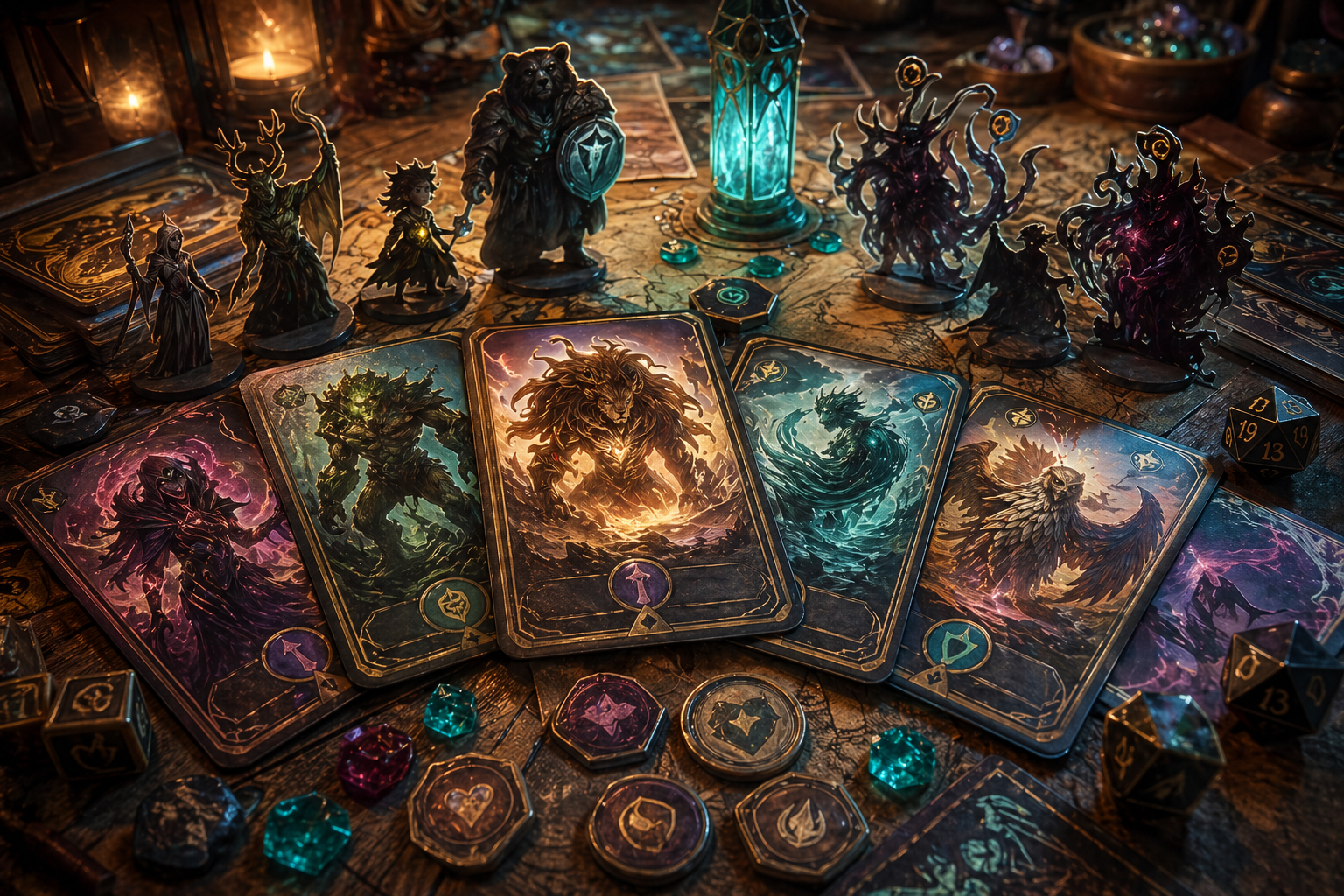
Cards and tabletop systems are especially powerful because they make invisible experiences physical: something people can hold, compare, swap, discuss, and remember.
Tactile design
Cards can become prompts, powers, challenges, rewards, booth handouts, collectible campaign assets, or the foundation of a bigger tabletop and digital world.
Game worlds
A tactical card-and-board universe where deckbuilding, lane control, movement, range, resources, and base attacks matter inside a post-impact mythic-industrial world.
Visit EooTA dedicated rugby sevens project hub for the sports-play side of the wider games portfolio.
Visit Rugby 7'sFormats
Decks, prompts, battle systems, cooperative mechanics, and social play formats.
DiaPals, monsters, powers, quests, status effects, campaign artefacts, and rewards.
Clinic, school, family, and charity resources that create better conversations.
Mini-games, app engagement loops, behavioural prompts, and reward systems.
Card system thinking
A diabetes monster can represent pressure, fatigue, hypo anxiety, device overwhelm, or social misunderstanding. A DiaPal can represent support, skill, humour, identity, or recovery. The mechanics help people discuss real experience at a safer distance.
Support power: turns a hard check-in into a shared moment.
Challenge power: appears when routine, mood, and timing collide.
Play this when the story needs a pause, not a judgement.
Design a system